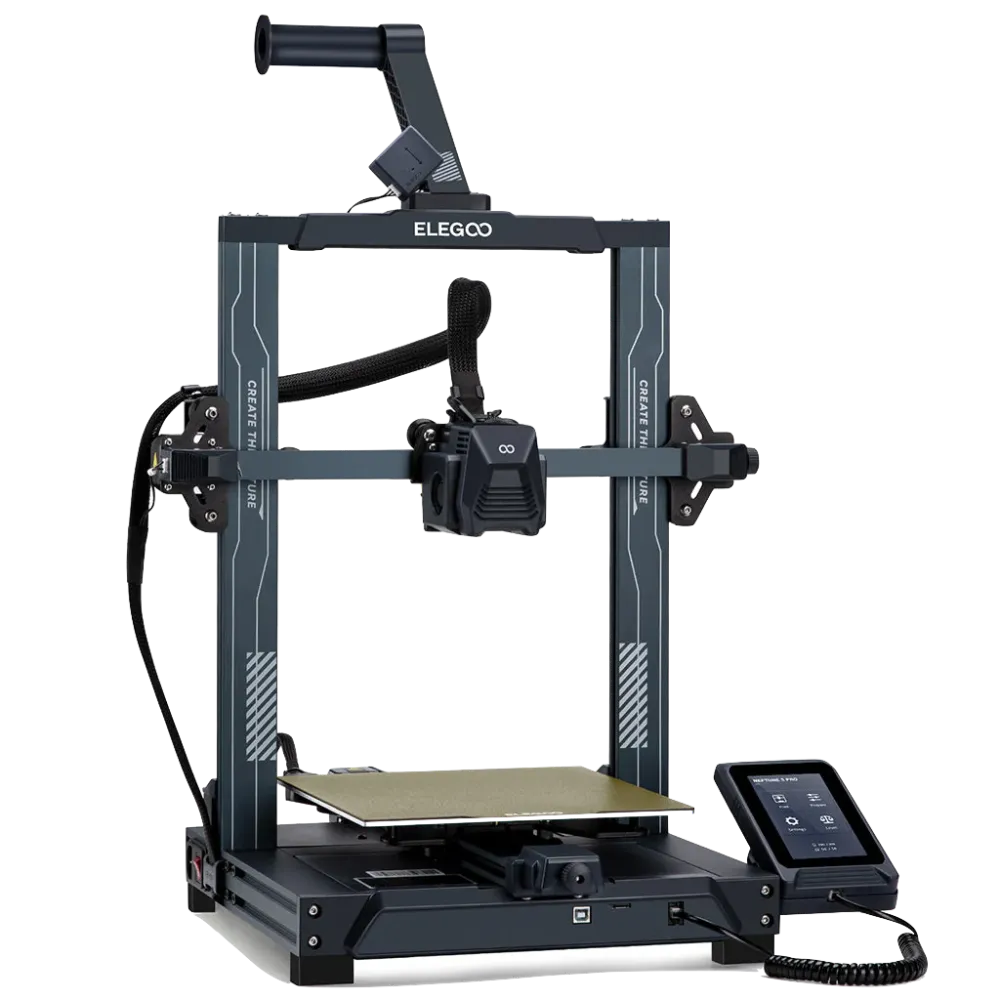
Elegoo Neptune 3 Pro
AVOIDFirmware support appears inactive, with no meaningful update signal for over a year. This printer appears overdue for replacement, refresh, or discontinuation.
Data refreshed: 16 May 2026
Where to buy
Specifications
- Build volume
- 225x225x280 mm
- Build size class
- Medium - Daypack / Backpack
- Price
- €149 (solo)
- Enclosure
- Open frame
- Chamber control
- None
- Materials
- PLA (all variants) · PETG · PHA · TPU · TPE
- Support materials
- —
- Bowden nozzle
- —
- Max hotend temp
- 260°C
- Max bed temp
- 100°C
- Max chamber temp
- —
- Nozzle material
- Brass
- Hardened nozzle
- —
- Nozzle count
- 1
- Max filament inputs
- 1
- True multi-material
- —
- Tool change
- Single Nozzle Pause Swap
Ownership
- Experience level
- Tinkerer
- Assembly
- Light Build
- Auto bed leveling
- Assisted
- Auto Z offset
- —
- Auto first layer
- —
- Runout sensor
- Yes
- Spaghetti detection
- —
- Error guidance
- Generic
- Warranty
- 3-6 months
- Spare parts
- Minimal
- Firmware version
- V1.1.5.1
Unlockable capabilities
- With hardened nozzle upgrade:
- Abrasive materials
Who this is for
Experienced tinkerers who find this printer at a substantial discount and enter with full awareness of the support state may find value in its open ecosystem and direct-drive hardware. Buyers who need active firmware development, reliable spare parts access, or long-term manufacturer backing should look elsewhere. The AVOID recommendation reflects lifecycle and support concerns, not a hardware verdict — for anyone committing to a new purchase today, those concerns carry real weight.
PrintSignals Review
Elegoo Neptune 3 Pro Review
Assessment
The brand has generally maintained a positive support posture across its lineup. The Neptune 3 Pro, however, sits well past its expected replacement window — based on a pattern derived from a brand average model lifespan of approximately 1.2 years, with no official discontinuation announced. Firmware updates have ceased entirely, with no activity in over a year, marking the end of active manufacturer software support. The concern here is timing, not hardware quality: buyers considering this printer today are purchasing into a closed support trajectory.
Build and print volume
The Neptune 3 Pro offers a medium build volume at 225×225×280 mm, suitable for mid-size parts. The open-frame design provides no thermal containment, leaving the print area fully exposed to ambient conditions. That exposure limits the reliable material range to warp-stable filaments. The hotend reaches 260°C and the bed reaches 100°C, but the absence of thermal containment governs the practical material range more than those specifications do.
Material capability
PLA in all its variants, PETG, and PHA form the reliable material core. The stock brass nozzle is not hardened; abrasive filaments require a hardened nozzle upgrade to work reliably. The direct-drive extruder extends hardware reach to flexible materials like TPU and TPE, though flexible printing is tuning-intensive and results depend on calibration, not just hardware. Multi-color printing uses a manual pause-and-swap method requiring hands-on filament changes at each color point; the single-nozzle design also carries cross-contamination risk that limits reliable mixed-material use.
Setup and ownership
This printer suits buyers who are comfortable with hands-on calibration and troubleshooting. Assembly is modest — typically 15 to 45 minutes of minor mechanical setup. Assisted bed leveling and filament runout detection ease some day-to-day tasks, though Klipper-based firmware means tuning and calibration remain ongoing parts of ownership, not occasional ones. Error messages are generic text or raw firmware output with no structured code system; independent diagnosis, often drawing on community resources and wikis, is the expected path when problems arise.
Support and longevity
Support channels exist, but coverage is inconsistent across warranty handling, parts access, and resolution quality — community resources tend to fill the gap rather than official responses when hardware problems arise. The official spare parts store carries very few items; parts not listed may be reachable through direct manufacturer contact, though availability is limited. Warranty coverage runs 3 to 6 months depending on the component. The ecosystem is fully open — compatible with any slicer and running open-source firmware — meaning community tools and resources remain accessible independently of the official support picture.